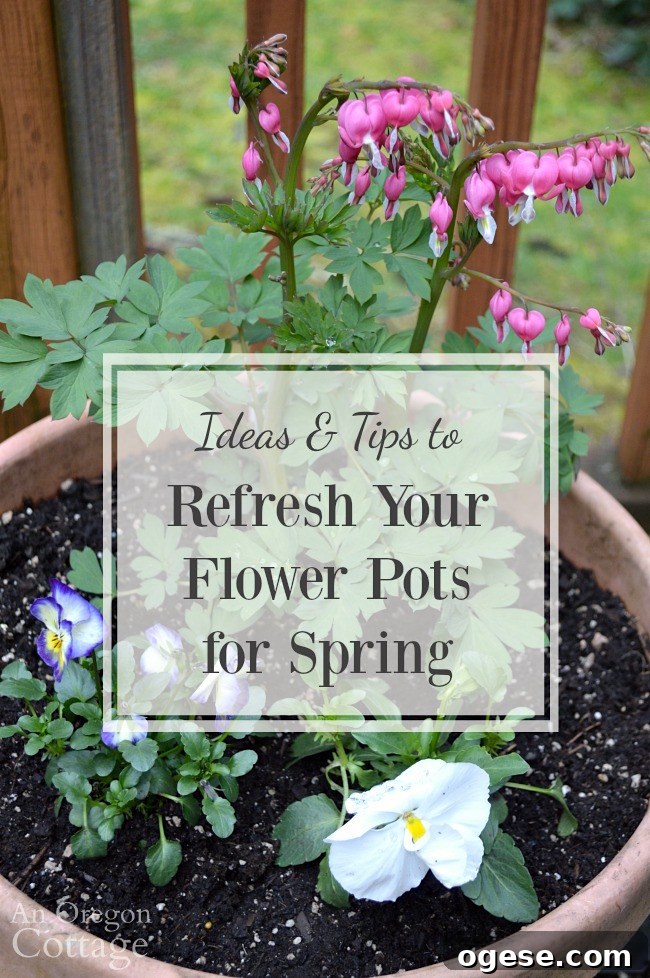
Plant your flower pots for spring with these practical tips and common early-season blooms such as bleeding hearts, primroses, violas, pansies and ranunculus.
Some links in this article are affiliate links and if you click on them I will receive a small commission at no cost to you.
I can’t wait for spring. Every year feels the same, but this season is a bit different: we still haven’t found a house and I haven’t started any seeds, which is usually my go-to way to get my hands in soil.
The next best thing was a pot refresh. My mom has plenty of containers, and she kindly let me give them a spring makeover.
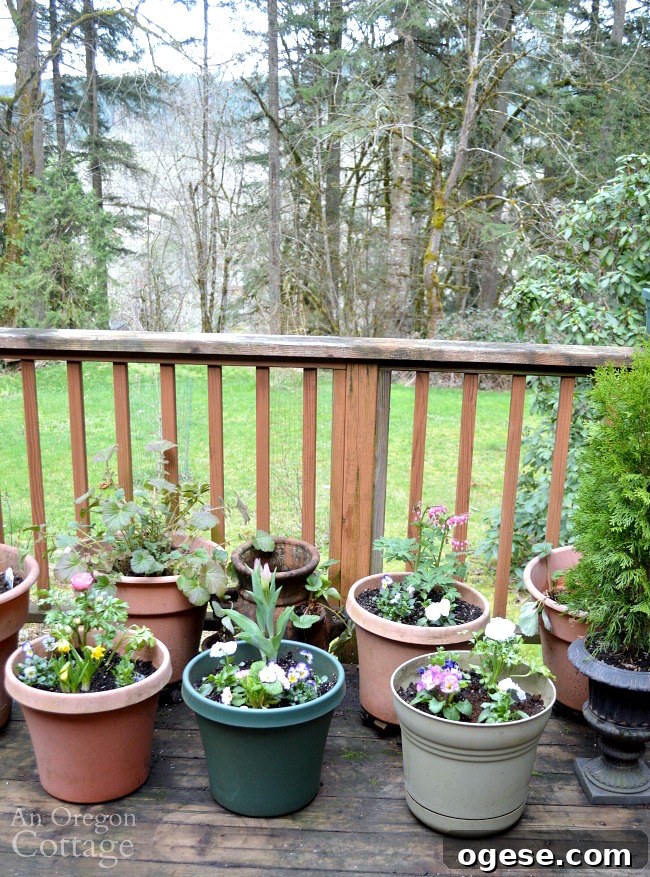
Here’s how the deck and pots looked after a long winter:
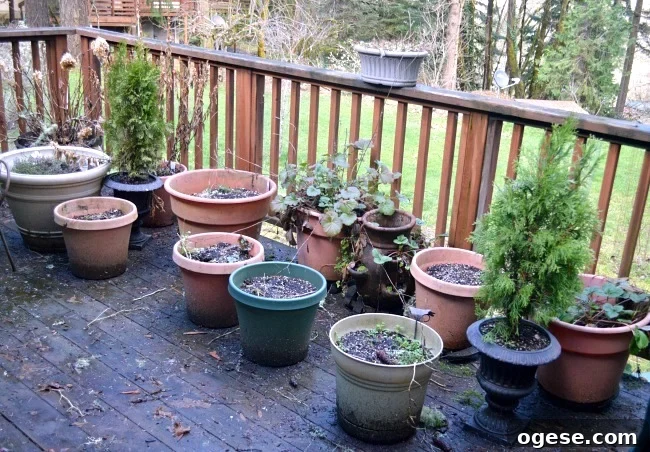
They were definitely worse for the wear after a colder, wetter winter with snow, ice, and wind. Because this view sits just outside the dining room where we work, refreshing the pots made a big impact on our daily view.
Once I bought the plants and a bag of fertilizer, it took about an hour and a half to brighten the area with fresh color and a good sweep. It made such a visible difference that I wanted to share simple, inexpensive spring container ideas you can replicate with readily available plants and a few basic steps.
Below are lists of garden-center flowers, easy planter combinations, a quick video demonstration of potting, basic maintenance tips (including approximate bloom lengths), and before-and-after photos to show the transformation.
Planting Flower Pots for Spring Video
How To Refresh Flower Pots for Spring
Step 1: Purchase flowers and any other supplies you may need
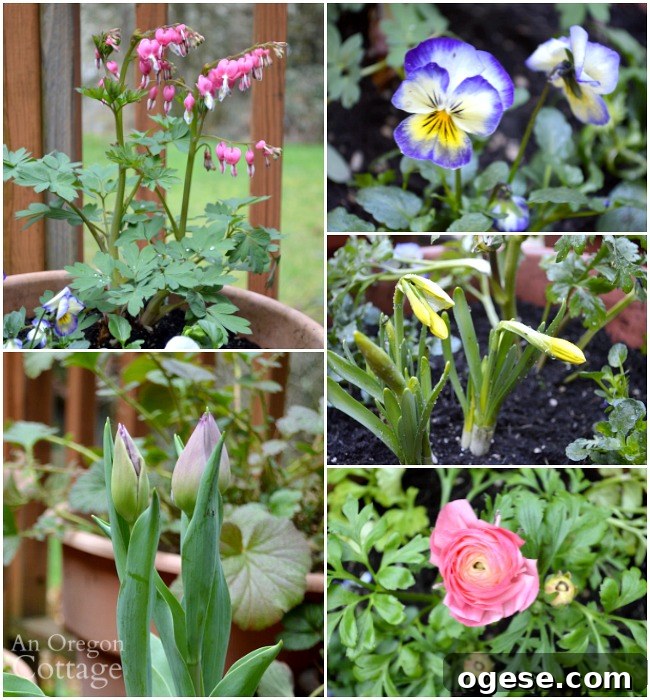
Flowers. Common early-spring plants you’ll find at garden centers include (pictured clockwise from top left above):
- Bleeding Heart (perennial) — a dramatic addition to containers, blooming for several weeks in cool spring weather.
- Pansies & Violas (annual) — pansies have larger blooms while violas are more profuse and often bloom longer.
- Daffodils (bulb) — varieties like ‘tete-a-tete’ are compact and bloom for a few weeks; their foliage can be planted in the garden after it yellows.
- Ranunculus (bulb) — layered, rose-like blooms in many colors that typically last around six weeks; some types can be moved to the garden for future seasons.
- Tulips (bulb) — classic spring flowers; move bulbs to the garden after foliage browns if you want them to return.
- Primroses (perennial) — inexpensive, cheerful bloomers that often flower for 4–6 weeks in early spring.
Note: perennial = returns yearly but often has a shorter bloom window; annual = lasts one season and may bloom continuously; bulb = shorter flowering period, but bulbs can be planted in the garden for future years.
- Organic fertilizer for flowers and bulbs.
- Fresh potting soil if containers need refreshing.
- Garden gloves, a small trowel, and a watering can for gentle watering and planting.
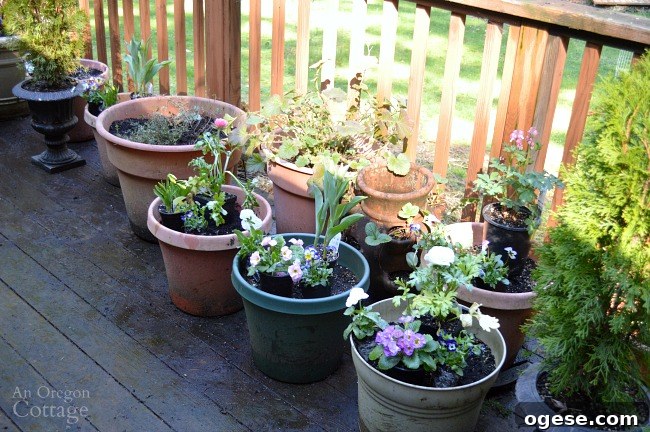
Step 2: Arrange your potted flowers in the planters
Try placing three to five plants per pot, varying types, heights and coordinating colors for interest. Set the pots in place first and step back to view the overall effect — trust your eye and rearrange until it feels balanced.
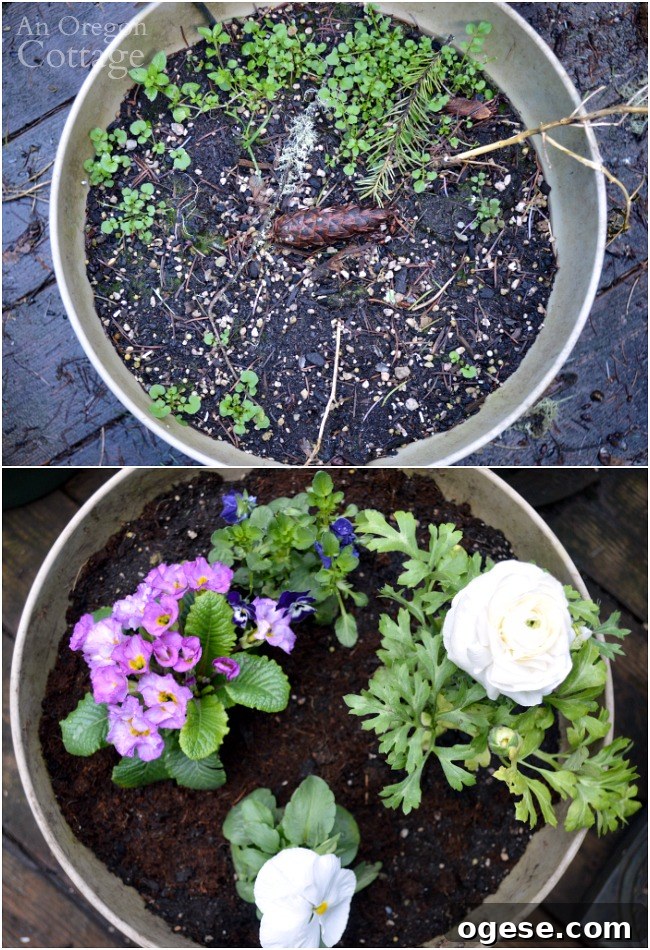
Step 3: Plant your containers
- Work one pot at a time, removing the arranged plants just before planting so you remember their placement.
- Refresh soil where needed by mixing in new potting mix. If starting fresh, fill to within 2–3 inches of the pot rim.
- Mix in organic fertilizer according to package directions.
- Begin with the largest plant and dig an appropriately sized hole.
- Gently remove each plant from its nursery pot by squeezing the sides and supporting the base as you tip it out.
- Loosen the root ball slightly. If root-bound, tease or divide roots on one or two sides so they grow outward into the new soil.
- Set each plant in place, backfill with soil and press firmly to remove air pockets.
- After planting all specimens, water thoroughly to settle the soil.
Here’s a quick time-lapse video I made illustrating these steps:
Planter ‘Recipes’ for Early Spring
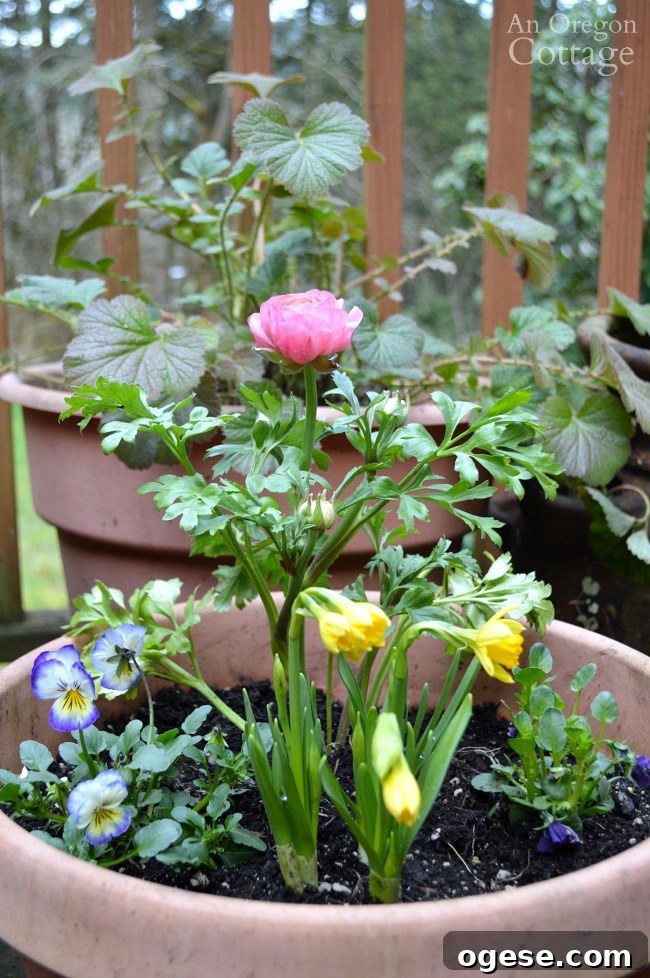
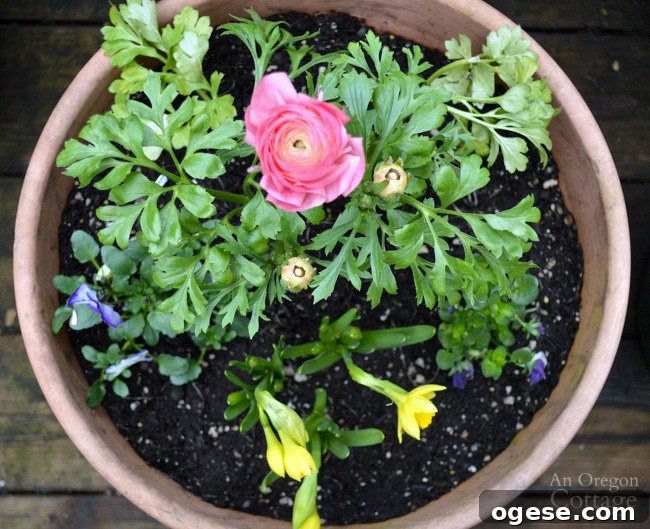
Pink ranunculus + tete-a-tete daffodils + two purple violas
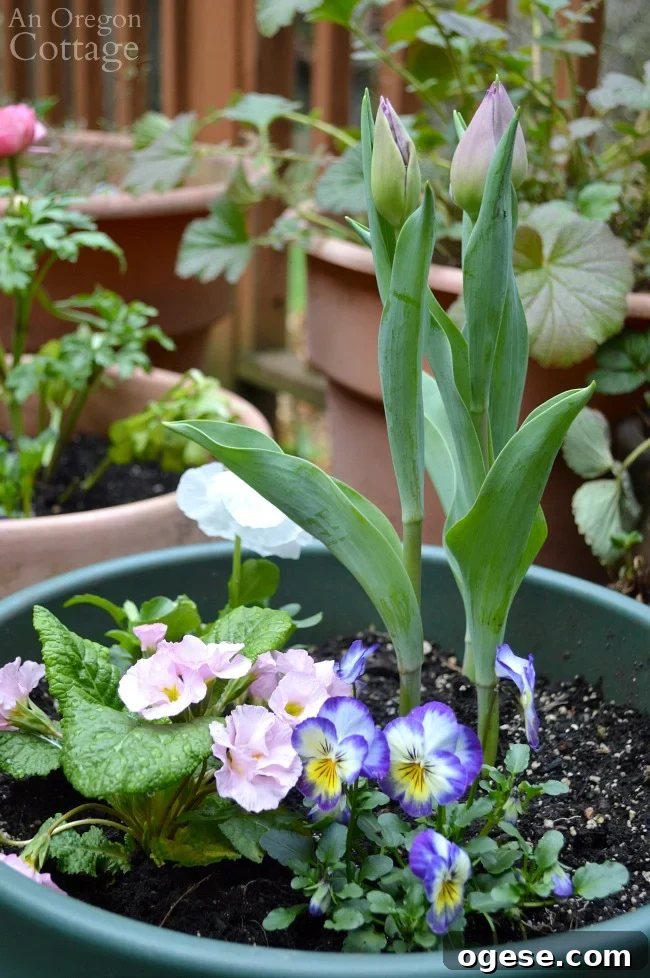
Three purple-pink tulip bulbs + pink primrose + white pansy + purple-white-yellow viola
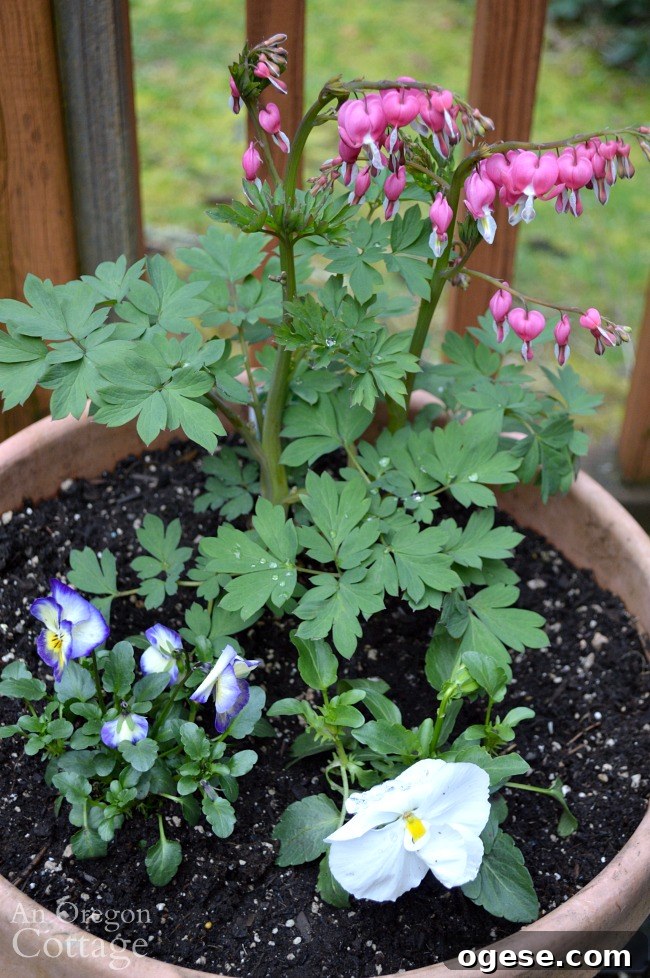
Bleeding heart + purple-white-yellow viola + white pansy
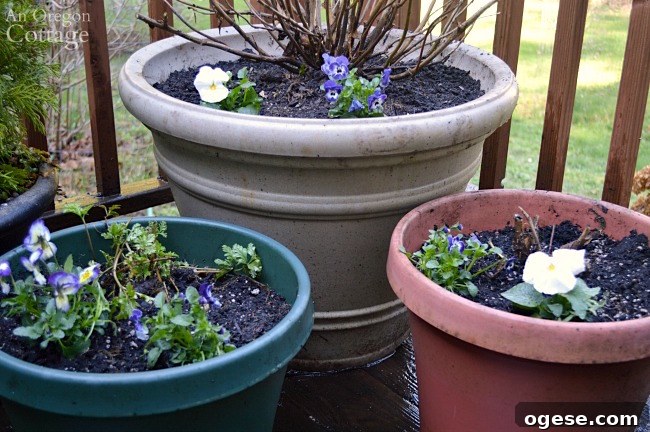
Violas and pansies used as colorful filler alongside later-blooming perennials and shrubs
Deck Before & After
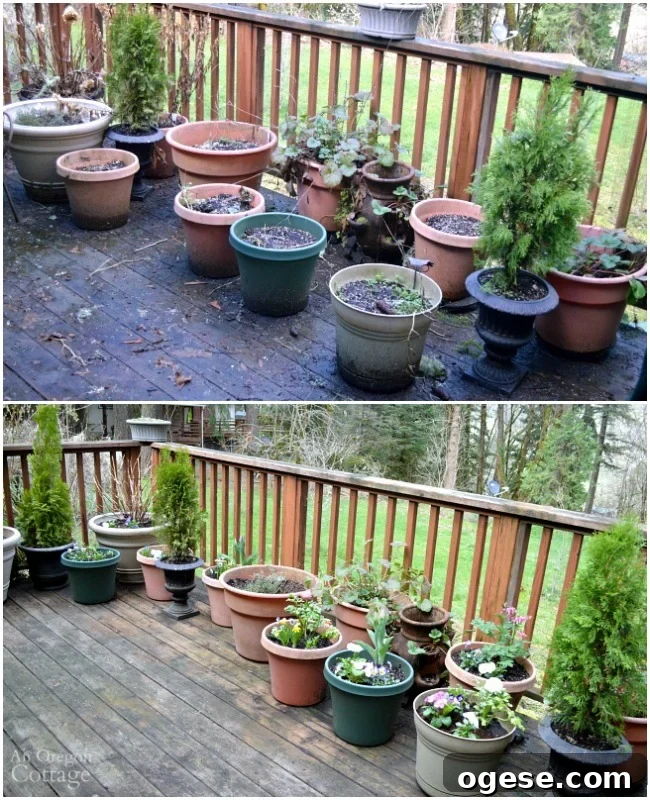
Much better, right? A simple refresh can lift your mood—the color and tidiness make the space feel cared for and welcoming.
Basic maintenance tips:
- Deadhead spent blooms to encourage more flowers and keep pots tidy.
- Water during dry spells; containers dry out faster than garden beds.
- When bulbs like tulips and daffodils finish blooming, leave the foliage until it yellows, then dig and plant bulbs in the garden if you want them to return next year.
- As early bloomers fade, replace them with longer-blooming summer annuals to maintain color through the season.
If you wonder whether spring containers are worth it, consider cost and enjoyment: with a bag of fertilizer and a few plants, each pot in this project ran about the price of a week’s bouquet. The pots bring color and satisfaction for weeks rather than days.
Plant one pot or several where you’ll see them daily so they can brighten your space for the coming months. Then enjoy planning how to transition to summer containers when these spring flowers finish their show.
Disclosure: affiliate links in this article may earn commission based on sales, but they do not change your price. Click here to read our full disclaimer and advertising disclosure.