Part 5 in a 5-part Quilting for Beginners series. This Binding Your Quilt section walks you through binding and finishing your quilt. Follow this step-by-step tutorial to complete your DIY quilt.
Binding Your Quilt – Quilting for Beginners Part 5
Welcome to the final installment of the 5-part series How to Make a Quilt for Beginners. In this guide we’ll finish your quilt by adding the binding and final touches. After all the piecing, basting, and quilting you’ve done, this final step is straightforward and very satisfying.
Choosing Binding Fabric
Binding are the fabric strips that join the quilt top to the backing and finish the raw edges. Choose a sturdy cotton similar to your quilt top. Avoid thin lining fabrics—pick material with enough body to withstand handling.
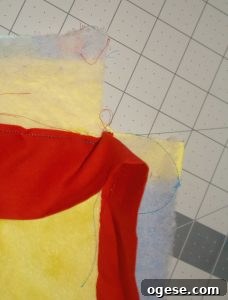
Before attaching binding, trim a square from each corner of the backing and batting as shown above. This helps you achieve clean mitered corners when the binding is applied.
Preparing and Applying Binding
Once your quilt is basted and quilted, you’re ready to prepare the binding strips.
1. Cut binding strips. For a twin-sized or larger quilt, cut strips about 4-1/2 inches wide. For baby or crib quilts, 2-1/2 to 3 inches may be sufficient, but you may need to trim the backing and batting slightly to match. Use a rotary cutter, ruler, and cutting mat to cut your strips.
To calculate how many strips you need: add the lengths of all four sides of your quilt to get the perimeter, then add 20 inches for overlap and trim. Divide the total by the length of each strip you cut and round up.
Example: Perimeter 231 inches + 20 = 251 inches. If strips are 74 inches long, 251 ÷ 74 = 3.4 → round up to 4 strips.
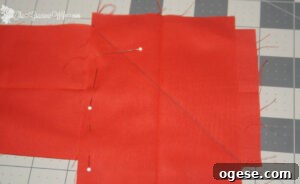
2. Join strips into one continuous strip. Lay one strip horizontally and another vertically across its end, overlapping like an L. Mark a 45° line where they overlap, sew along that line, trim a 1/4-inch from the seam, then press the seam open or to one side. Repeat until all strips are joined.
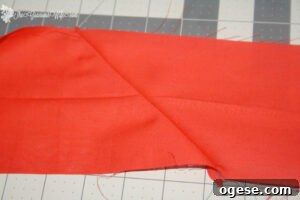
Tip: Always keep the original horizontal strip on the bottom when joining. Swapping positions can place seams on opposite sides and create exposed seams later.
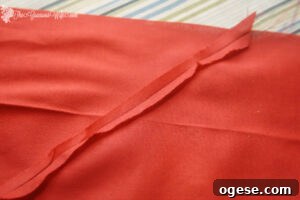
3. Fold and press the binding. Fold the long binding strip in half lengthwise and press so it holds its shape.
4. Position the binding on the quilt (layout dry run). Lay the folded binding along the quilt edge with the raw edges aligned to the quilt top edge. Start about halfway along a side rather than directly at a corner. Miter the corners by folding the binding up at a 45° angle, then folding it down along the next edge. Continue around the quilt, checking that seams don’t fall at corners; adjust placement a few inches if necessary. Pin only the starting edge to mark where you’ll begin sewing.
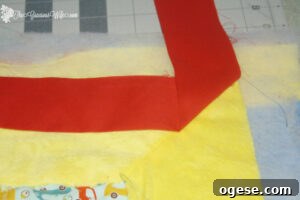
5. Sew the binding to the quilt top. Begin sewing about 3–4 inches from the pinned starting edge using a 1/4-inch seam allowance and backstitch at the beginning. Stop stitching about 1/4 inch before each corner, backstitch, lift the presser foot, and pivot. At each corner, fold the binding up to form a 45° crease and then fold it down along the next edge, pinning the crease. Continue sewing until you reach a point about 4 inches from the starting pinned edge (leaving an 8-inch or so gap).
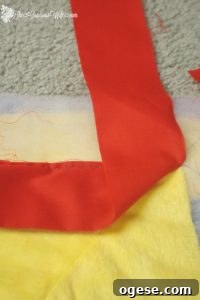
6. Join the start and end of the binding on the quilt. Unpin and open the starting section so it lies flat. Fold the raw ends inward so they’re hidden and press. Trim the ending strip so it overlaps about 2 inches past where it will meet the starting strip. Tuck the trimmed end into the starting fold (like a double taco), pin, and stitch the join starting at least an inch before where you stopped and continuing an inch past your original start. Backstitch at the beginning and end of this seam.
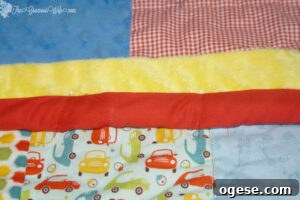
7. Wrap the binding to the back and pin. Fold the binding over the quilt edge toward the backing, aligning the folded edge so it just covers the stitching line on the front. Move the binding up an eighth of an inch and pin through all layers. Because of the earlier corner folds, the corners will form neatly on the back—tuck and pin them on the diagonal. Use plenty of pins to keep everything smooth and even.
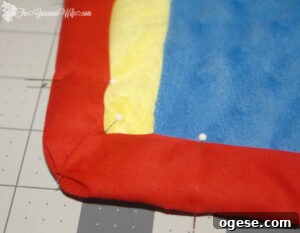
8. Final stitching on the front side. With the quilt top facing up, stitch in the ditch of the seam where you attached the binding on the front side. Start at a corner, stitch along that seam line, stop to pivot at corners, and continue around the quilt. Backstitch at the beginning and end of your stitching. This secures the folded binding to the back and creates a neat edge on the front.

9. Final touches. Remove pins, trim any loose threads, and give your quilt a final press if needed. Your quilt is complete—congratulations!
I’d love to see your finished quilt—share a photo if you can.
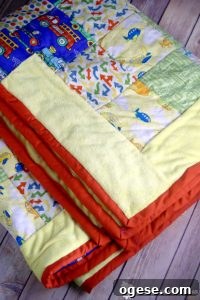
If you enjoyed this Piecing and Finishing Your Quilt Top section, explore more sewing and craft projects for ideas and inspiration.
Quilting for Beginners – 5 Part Series
DIY Washable Reusable Bowl Covers
Easy DIY Bandana Tablecloth
Photo Credit: DollarPhotoClub.com