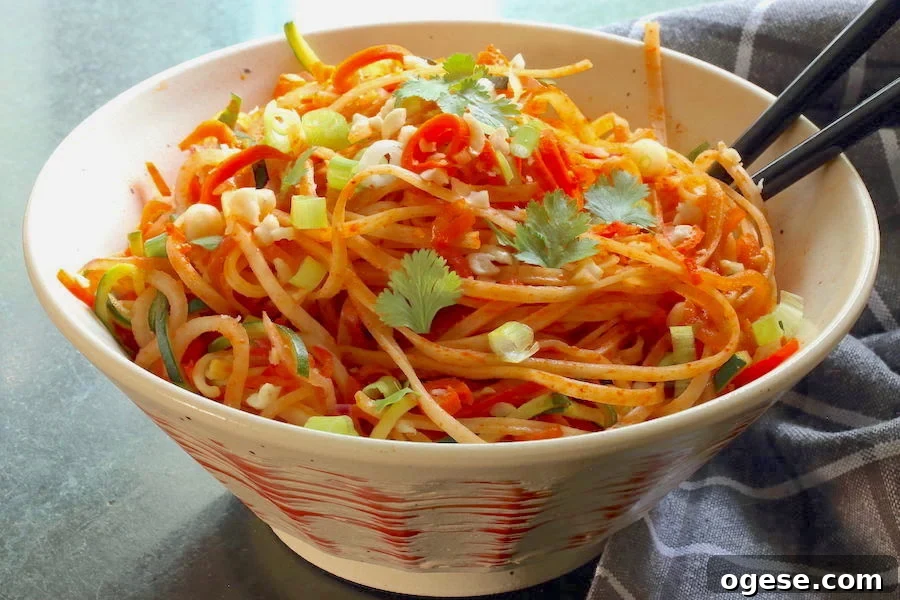
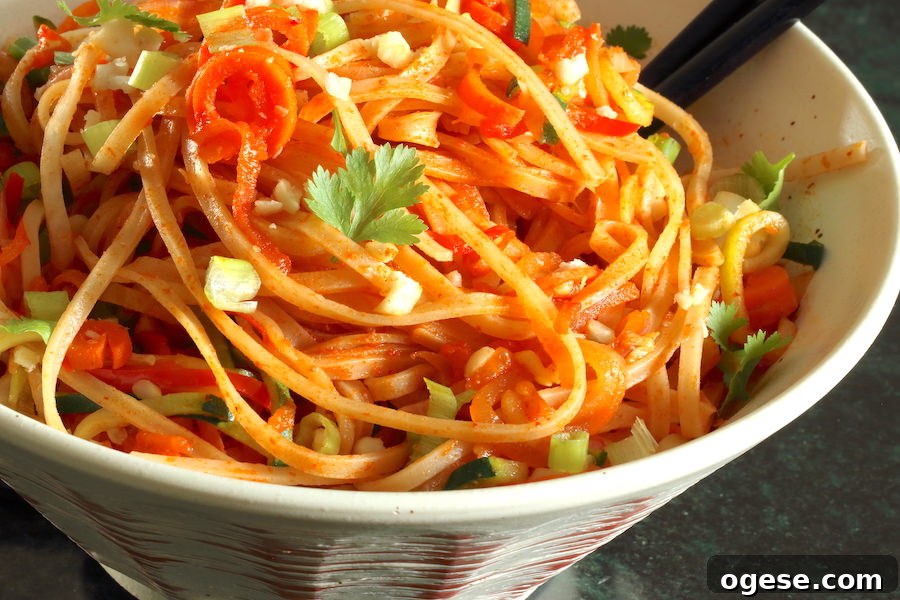
This Vegan Thai Noodles recipe is a fresh take on pad Thai. What sets it apart is that it’s soy-free and bursting with colorful vegetables that are spiralized, grated, or thinly sliced. Preparing the vegetables this way helps them cook quickly and toss easily with the rice noodles and sauce — and the final dish looks beautiful 🙂
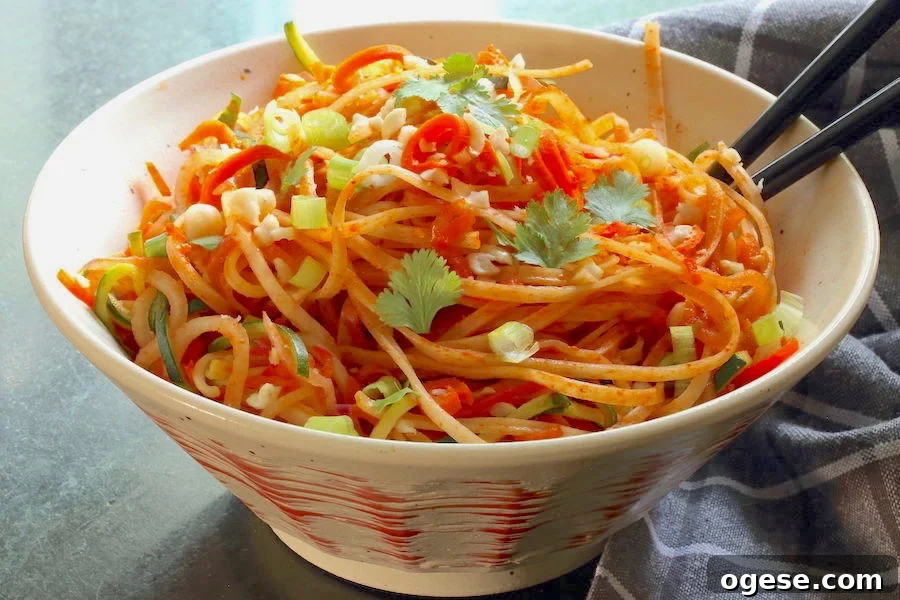
For this recipe the rice noodles are soaked in water for 20–30 minutes rather than boiled, then briefly stir-fried so they finish softening with the sauce.
This soy- and fish-free sauce uses raw honey (or agave), coconut aminos, rice vinegar, red curry paste, and vegetable broth. For extra umami, you can steep a small piece of kombu and one or two dried mushrooms in hot water and add that darkened broth to the sauce—an optional step that deepens flavor.
Method Overview
- Soak the rice noodles; optionally soak kombu and dried mushrooms for extra flavor
- Spiralize, grate, or thinly slice the vegetables
- Whisk together the sauce
- Stir-fry the vegetables briefly, then the noodles
- Toss everything with the sauce and finish with garnishes
Preparing veggies for Vegan Thai Noodles
A spiralizer easily turns zucchini, carrots, daikon, and even peppers into long, attractive vegetable “noodles” that pair well with rice noodles and sauce. If the strands are very long, cut them with kitchen shears or a knife to make them easier to eat.
No spiralizer? Use a box grater to shred zucchini, carrot, and daikon, and thinly slice the pepper and red onion.
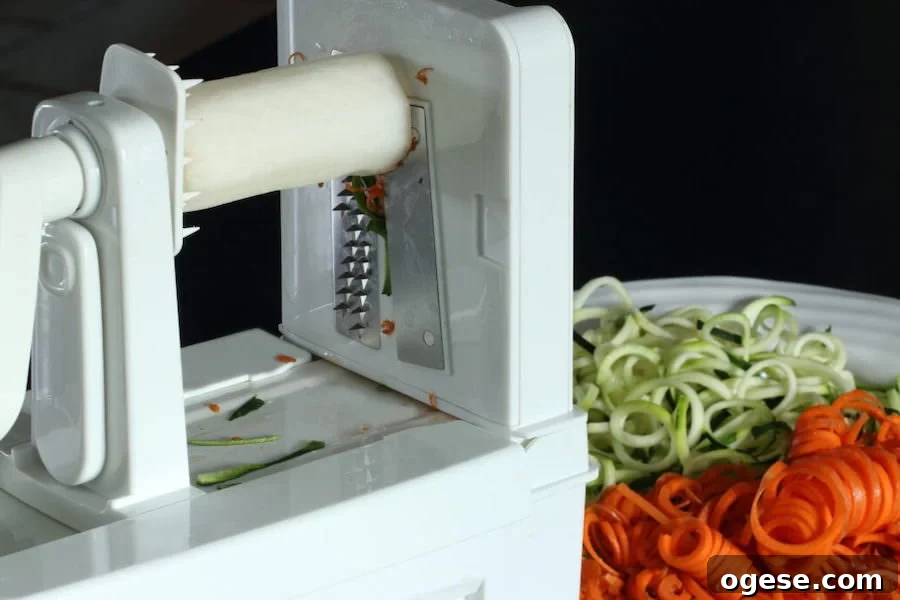
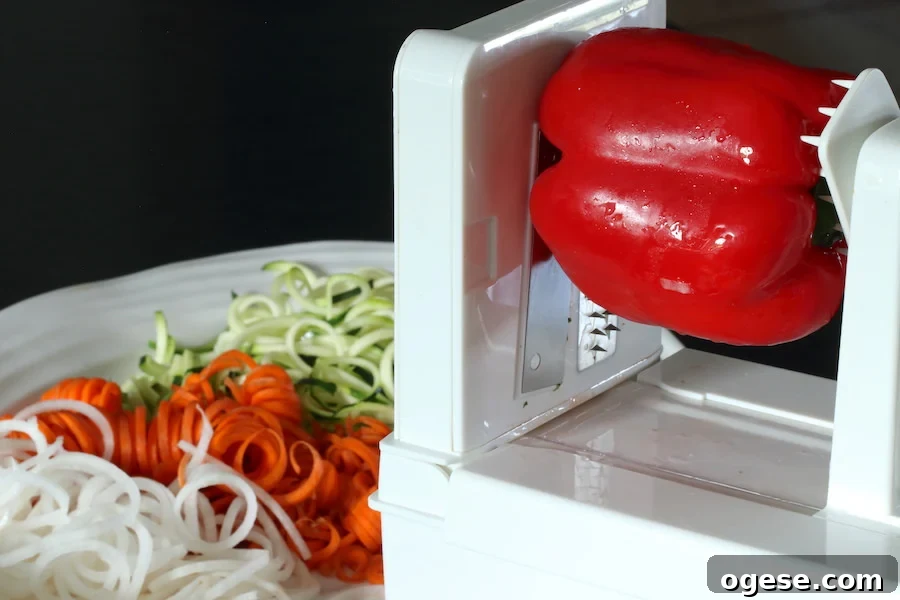
I’ve spiralized zucchini, carrots, and daikon for years, and recently tried spiralizing a whole red bell pepper — it worked really well. When you reach the seeded core you can remove it, rinse away the seeds, then finish spiralizing.
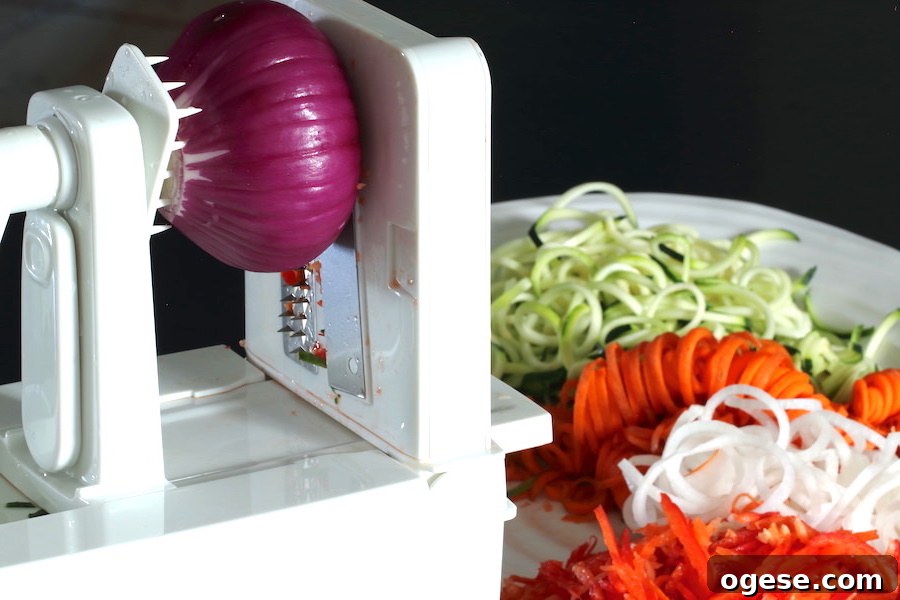
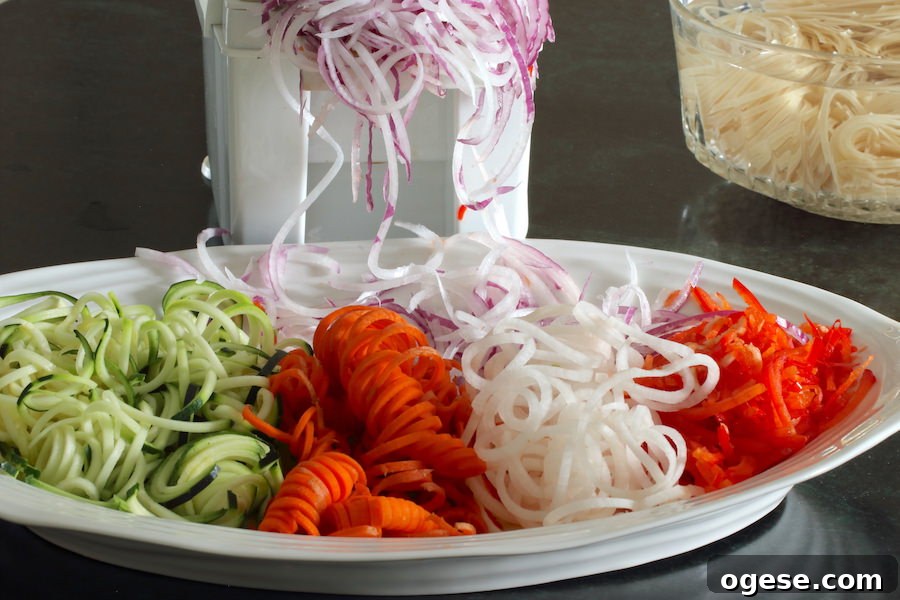
This was also my first time spiralizing a whole red onion — it was surprisingly quick and easy.
Arrange the veggie noodles and soaked rice noodles and stir-fry briefly in oil or vegetable broth for an oil-free option. If you prefer cooking without oil, you can stir-fry in a splash of vegetable broth instead.
Optional additions: snow peas, green beans, or sweet peas for added texture and color.

Vegan Thai Noodles (Soy-Free)
Equipment
-
spiralizer or box grater
-
large skillet
Ingredients
- 8 ounces pad Thai rice noodles
- 1-inch square of kombu seaweed (optional)
- 1–2 dried shiitake mushrooms (optional)
- 1 medium zucchini
- 2 medium carrots
- 1 medium daikon radish
- 1 medium red bell pepper
- 1 medium red onion
- 2 Tablespoons olive oil, divided
For the Sauce
- 1 Tablespoon raw honey or agave syrup
- 2 Tablespoons coconut aminos
- 2 Tablespoons rice vinegar
- 3 Tablespoons red curry paste
- 1/4 cup low-sodium vegetable broth
To Garnish
- 2 Tablespoons ground peanuts
- 1/8 to 1/4 cup chopped scallions
- 1/8 to 1/4 cup basil chiffonade or chopped cilantro
- 1 lime cut into wedges
Instructions
-
Soak the rice noodles in water until they soften, about 20–30 minutes.
-
While the noodles soak, put kombu, dried mushroom(s), and 1/4 cup water in a small pan. Bring almost to a boil, then turn off the heat and let them steep in the hot water.
-
Spiralize the vegetables. If you don’t have a spiralizer, grate the zucchini, carrots, and daikon with a box grater, slice the pepper into thin strips, and thinly slice the onion.
-
Strain the kombu and mushrooms from the soaking liquid. Combine that liquid (or an extra 1/4 cup vegetable broth if you skipped the kombu) with the rest of the sauce ingredients and whisk until smooth.
-
Heat 1 tablespoon of oil in a large skillet over medium-high heat with a few of the vegetables so they begin to sizzle. Add the remaining vegetables and stir-fry just a few minutes until crisp-tender. Remove the vegetables and set aside.
-
Drain the soaking water from the noodles. Add the remaining tablespoon of oil to the skillet and stir-fry the noodles about one minute while tossing. Pour the sauce over the noodles and continue tossing until the noodles are al dente—soft but still offering slight resistance.
-
Return the vegetables to the pan and toss everything together until heated through. Avoid overcooking to keep the vegetables and noodles from becoming mushy.
-
Serve garnished with ground peanuts, scallions, herbs, and lime wedges.
Nutrition
|
Carbohydrates: 44 g
|
Protein: 4 g
|
Fat: 7 g
|
Fiber: 4 g
How to Chiffonade Basil
Chiffonade is a simple technique to cut basil and other leafy herbs into thin ribbons that make an attractive garnish.
- Stack 4–5 basil leaves evenly, then roll them tightly into a cigar shape.
- Saw thin slices across the roll with a sharp knife or kitchen shears to create delicate ribbons. Repeat as needed.
Omnivore Variation
For non-vegans, add 3–5 cooked shrimp to each serving just before serving for extra protein.
More Soy-Free Vegan Recipes
If you like this recipe, try the Vegetarian Thai Green Curry or the Healthy Ramen Noodle Bowl on the same site for more flavorful, soy-free, plant-based meals.
Judy offers holistic nutrition coaching (in-person and remote). Learn about her services and credentials on her website.